How to Read a Forex Quote: Understanding Bid, Ask, and Spread
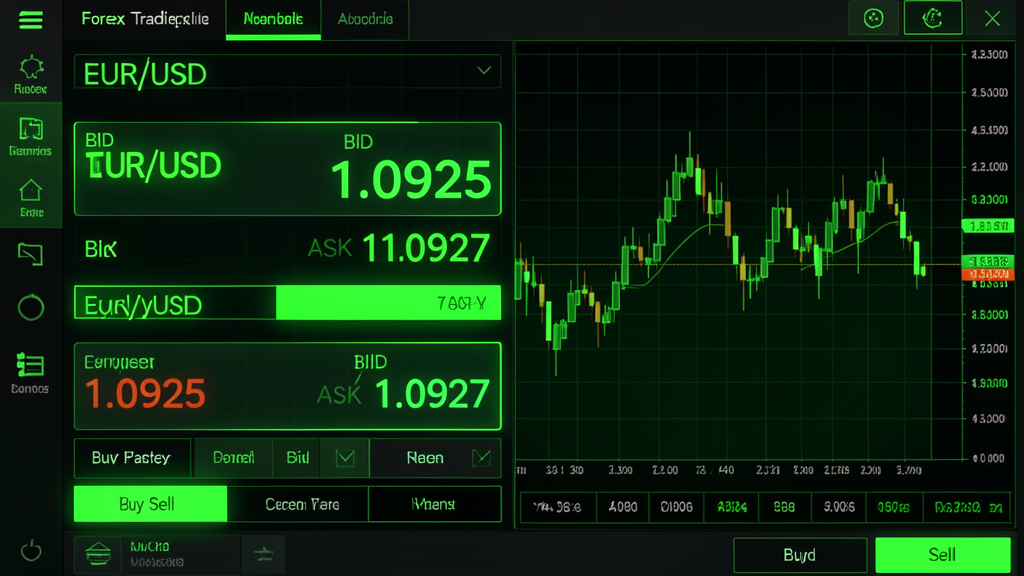
When you first open a forex trading platform — whether it's Travia, MetaTrader, or any other — the screen is filled with numbers. Two prices for every currency pair. A spread. A pip value. It can feel overwhelming, especially if you're coming from stocks or crypto, where the quote structure is much simpler.
Here's the good news: once you understand how to read a forex quote, everything else — pips, spreads, position sizing, even strategy building — becomes dramatically clearer. It's the single most foundational skill in forex trading, and most beginners skip it in their rush to place a trade.
In this guide, we'll break down exactly what every number in a forex quote means, why there are two prices, and how the bid-ask spread affects your bottom line on every single trade.
What Is a Forex Quote?
A forex quote is simply the price of one currency expressed in terms of another. Currencies are traded in pairs — you buy one and sell the other simultaneously. The most common format you'll see looks like this:
EUR/USD 1.0925 / 1.0927
Or, on some platforms:
EUR/USD 1.0925 / 1.0927
The first currency (EUR, in this case) is called the base currency. The second currency (USD) is the quote currency or counter currency. The number tells you how much of the quote currency is needed to buy one unit of the base currency.
So EUR/USD at 1.0925 means: "It costs 1.0925 US dollars to buy 1 euro." Simple enough — but why are there two numbers?
The Bid and Ask: The Two Prices You Always See
Every forex quote has two prices — the bid and the ask. Understanding the difference between these two is the most important concept in this entire article.
The Bid Price (What the Market Will Buy From You)
The bid is the price at which the market (your broker, the liquidity provider, or the exchange) is willing to buy the base currency from you. If you are selling EUR/USD, you will sell at the bid price.
Think of it like this: if you're selling your used car to a dealer, they'll quote you a lower price — the price they'll pay you. That's the bid.
The Ask Price (What the Market Will Sell To You)
The ask (sometimes called the offer) is the price at which the market is willing to sell the base currency to you. If you are buying EUR/USD, you will buy at the ask price.
Continuing the car analogy: if you want to buy a used car from the dealer, they'll quote you a higher price — the price you'll pay. That's the ask.
Reading the Quote
Going back to our example:
EUR/USD 1.0925 / 1.0927
- Bid: 1.0925 — The market will buy EUR from you at this price
- Ask: 1.0927 — The market will sell EUR to you at this price
If you want to buy EUR/USD (betting the euro will rise against the dollar), you buy at the ask: 1.0927. If you want to sell EUR/USD (betting the euro will fall), you sell at the bid: 1.0925.
"The bid-ask spread is the invisible cost of every trade. You don't see a separate commission line — but the spread is always there, and it's the first thing that needs to be overcome for a trade to become profitable."
What Is the Spread — and Why Does It Matter?
The spread is the difference between the bid and the ask price. In our example:
Ask (1.0927) - Bid (1.0925) = 0.0002 = 2 pips
This means the spread is 2 pips. Every time you open a trade, you're immediately 2 pips in the hole — because you bought at the ask (higher) but the market values your position at the bid (lower) right after entry.
For the trade to break even, the price must move at least 2 pips in your favor. That's the spread cost.
Why Spreads Vary
Spreads are not fixed. They change based on three main factors:
- Liquidity: Major pairs like EUR/USD and USD/JPY have tight spreads (0.5–2 pips). Exotic pairs like USD/TRY or USD/ZAR can have spreads of 20–50 pips or more.
- Market volatility: During major news events (NFP, FOMC, CPI), spreads widen significantly as liquidity providers pull back. A 2-pip spread on EUR/USD can suddenly become 5–10 pips.
- Time of day: During the Asian session, when liquidity is lower, spreads tend to be wider. During the London-New York overlap, spreads are at their tightest.
Pips and Pipettes: Measuring Price Movement
Once you understand the quote, you need to understand how prices move. The unit of measurement in forex is the pip.
What Is a Pip?
A pip (short for "percentage in point") is the smallest price move that a currency pair can make based on market convention. For most major pairs quoted to 4 decimal places:
- 1 pip = 0.0001
- In our EUR/USD example: a move from 1.0925 to 1.0926 = 1 pip
For pairs involving the Japanese yen (quoted to 2 decimal places):
- 1 pip = 0.01
- Example: USD/JPY moving from 154.20 to 154.21 = 1 pip
What Is a Pipette?
Most modern brokers now quote to an additional decimal place — a pipette or fractional pip:
- EUR/USD: 1.09255 — the last digit (5) is a pipette (1/10th of a pip)
- USD/JPY: 154.205 — the last digit (5) is a pipette
This extra precision helps brokers offer tighter spreads and allows for more granular strategy execution.
Putting It All Together: A Real Trade Example
Let's walk through a real trade scenario so you can see how the quote, bid, ask, spread, and pips all work together.
Setup:
- Pair: EUR/USD
- Quote: 1.0925 / 1.0927 (2-pip spread)
- You want to buy 1 standard lot (100,000 units)
Step 1: You buy at the ask price
You enter a buy order at 1.0927. The notional value of your position is 100,000 × 1.0927 = $109,270.
Step 2: The market moves
EUR/USD rises to 1.0950 / 1.0952. The spread is still 2 pips. The bid is now 1.0950.
Step 3: You sell at the bid price
You close your position by selling at 1.0950 (the bid price).
Step 4: Calculate profit
Sell price (1.0950) - Buy price (1.0927) = 0.0023 = 23 pips of profit
For 1 standard lot on EUR/USD, each pip is worth approximately $10. So 23 pips × $10 = $230 profit.
Notice that the spread cost you 2 pips at entry — without it, you'd have made 25 pips. On a 25-pip winner, the spread consumed 8% of your potential profit. On a 5-pip scalp, the spread would consume 40%.
How to Use Quote Knowledge to Trade Better
Understanding quotes isn't just academic — it directly affects your trading decisions:
1. Choose Pairs With Tight Spreads
If you're a day trader or scalper, stick to the major pairs: EUR/USD, USD/JPY, GBP/USD, USD/CHF, AUD/USD, and USD/CAD. These consistently have the tightest spreads, which means lower transaction costs and less price movement needed to become profitable.
2. Avoid Trading During Low Liquidity
Spreads can double or triple during the Asian session (especially for pairs involving European currencies). If you're trading EUR/USD, the best time is during the London-New York overlap (12:00–16:00 GMT) when liquidity is highest and spreads are tightest.
3. Factor Spread Into Your Stop Loss
When calculating your stop loss distance, remember that you're already paying the spread. If you want a 20-pip stop on a pair with a 2-pip spread, set your actual stop 18 pips from entry — your effective stop is 20 pips including the spread.
4. Automate Quote-Aware Strategies on Travia
On Travia, you can build strategies that account for spreads automatically. When you forward-test a strategy, the platform simulates the bid-ask spread in real-time, so your backtest results reflect actual trading costs — not idealized "no spread" numbers that look better than reality.
This is one of the biggest advantages of using a platform like Travia for systematic trading: the quote structure is baked into the simulation, so you know exactly how much your strategy will cost to run before you risk a single dollar.
Common Beginner Mistakes With Forex Quotes
Mistake: Confusing Bid and Ask
It's the most common error. Remember: Bid = broker buys from you (lower price). Ask = broker sells to you (higher price). If you're buying, look at the ask. If you're selling, look at the bid.
Mistake: Ignoring the Spread on Small Accounts
On a $500 account, a 2-pip spread on a 0.01 lot trade might seem insignificant. But if you're making 10 trades per day, that's 20 pips per day in costs — 400 pips per month. On a small account, spreads eat a much larger percentage of your capital.
Mistake: Not Checking Spread During News
Spreads can widen to 10–15 pips during NFP or FOMC announcements. If you enter a trade during those moments, you're starting with a massive disadvantage. Either widen your stop to account for the spread or wait until liquidity normalizes.
Final Thoughts
Reading a forex quote is the first skill every trader should master — not RSI, not MACD, not Fibonacci. Until you understand what those two numbers on your screen actually mean, you're trading blind.
The bid-ask spread is your real transaction cost. It's not a fee or a commission — it's baked into the market structure. And the traders who understand this structure are the ones who survive long enough to figure out the rest.
On Travia, every forward-test and live trade simulation accounts for the spread automatically. You can build a strategy, let it run through hundreds of simulated trades with real market conditions — including bid-ask spreads — and see your true expected performance. No hidden costs. No surprises. Just the real numbers, every time.