How to Deal with Trading Losses: A Forex Psychology Guide
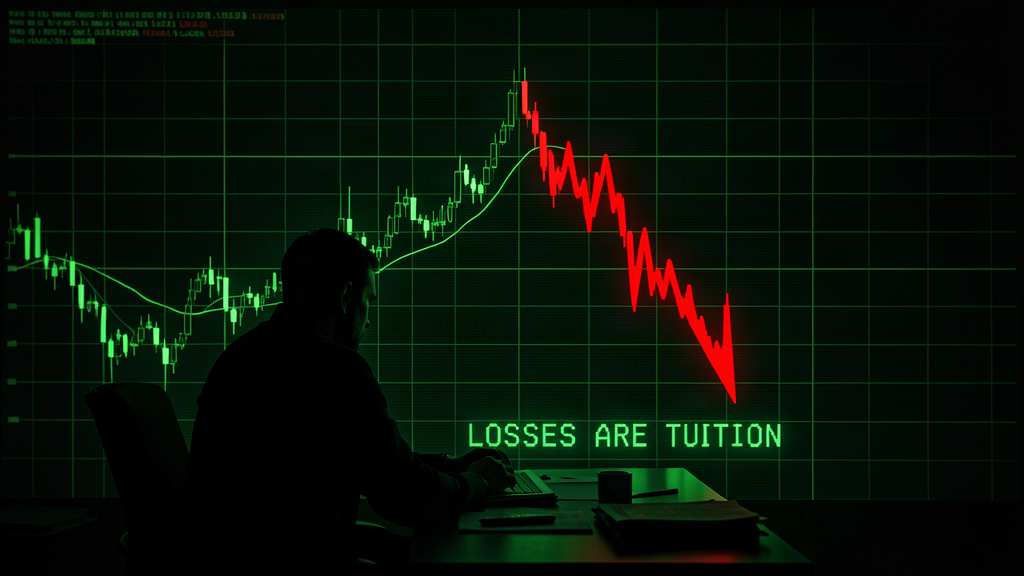
Let's be honest about something most traders don't want to talk about: losing money. Whether you've been trading for three weeks or three years, losses are an unavoidable part of the forex market. The difference between traders who eventually succeed and those who wash out isn't that the winners never lose — it's that they've learned how to deal with trading losses effectively.
In this guide, we'll walk through the psychology of trading losses, the emotional traps that follow, and a practical framework to help you bounce back stronger. If you've ever taken a loss that shook your confidence, this one's for you.
Why Trading Losses Are Inevitable in Forex
First, let's get one thing straight: no strategy has a 100% win rate. Even the best forex trading strategies in the world lose 30–40% of the time. The forex market is driven by millions of participants making decisions based on incomplete information, and you will never have perfect certainty on any trade.
Think of trading like baseball. The best hitters in MLB history — players like Ted Williams or Tony Gwynn — succeeded only about 3 out of every 10 at-bats. They got paid millions because they made those 3 hits count, not because they never struck out. Trading works the same way. Your goal isn't to avoid losses; it's to make your wins bigger than your losses over time.
The Emotional Cycle of a Trading Loss
Understanding what happens emotionally when you take a loss is the first step to controlling it. Most traders go through a predictable cycle:
1. Shock and Denial
"This can't be happening. The trade was perfect — it should have worked." In this phase, you're still staring at the chart, convinced the market will reverse. Many traders hold losing positions way too long because they refuse to accept reality.
2. Anger and Blame
"The market is rigged. My broker is manipulating the spreads. That news event came out of nowhere." Anger is your brain's defense mechanism. It externalizes the blame so you don't have to examine your own decisions. It's also the most dangerous phase — angry traders revenge trade and blow up accounts.
3. Bargaining
"If I just hold a little longer... if I move my stop loss wider... if I use a different indicator next time..." Bargaining involves trying to undo the loss mentally. This is where traders jump from strategy to strategy without giving any of them a fair shot.
4. Acceptance
"I took a loss. It happens. Let me review what went wrong and move on." This is where real growth happens. Acceptance doesn't mean you're happy about the loss — it means you've processed it and are ready to learn from it.
The goal is to move through this cycle as quickly as possible. The best traders can go from "ouch" to "what can I learn?" in a matter of minutes.
Practical Strategies for Handling Forex Losses
Here are five concrete techniques to help you manage the emotional impact of trading losses:
1. Pre-Define Your Maximum Loss
Before you enter any trade, decide exactly how much you're willing to lose — in dollars, not percentage points. This should be a number that, if lost, won't affect your mood for the rest of the day. Professional traders typically risk no more than 1–2% of their account on any single trade. Set your stop loss at that level and do not move it.
2. Keep a Trading Journal
Write down every trade you take, including your emotional state at entry and exit. A trading journal helps you spot patterns. Are you more likely to lose after a big win (overconfidence)? After a bad day at work (distraction)? After a string of losses (tilt)? A tool like Travia makes this easy with built-in trade logging and performance analytics.
3. Use the \"24-Hour Rule\" After a Big Loss
After any loss that exceeds your normal tolerance, step away from the charts for 24 hours. No exceptions. The market will still be there tomorrow. Use that time to exercise, spend time with family, or review your journal — anything except placing another trade. This single rule has saved more trading accounts than any indicator ever invented.
4. Focus on Process, Not Outcome
A good trade can lose money and a bad trade can win money. Judge yourself by whether you followed your trading plan, not by whether the trade was profitable. If you followed the plan and lost, that's a win in terms of discipline. If you broke the rules and won, that's a loss in terms of habits.
5. Test Strategies Without Emotional Risk
One of the best ways to build confidence and reduce the sting of losses is to test your strategies in a low-stakes environment. With Travia's forward-testing mode, you can run your strategies against live market data without risking real capital. This lets you prove (or disprove) your edge before committing real money. When you know your strategy has a positive expectancy, individual losses become much easier to stomach.
How to Learn from a Losing Trade
Every loss contains a lesson if you're willing to look for it. Here's a simple post-loss review framework:
- Was the trade setup valid? Did your entry criteria actually trigger, or did you force a trade that wasn't there?
- Did you follow your plan? Did you place your stop correctly? Did you exit at the right time?
- Was your position size appropriate? Were you risking more than usual?
- Were there external factors? News event? Economic data? A major support level breaking?
- What would you do differently next time? Be specific. Vague answers mean you haven't learned anything.
Write down the answers to these five questions for every significant loss. Over time, you'll start to see patterns — and those patterns will tell you exactly what you need to improve.
Building Resilience as a Forex Trader
Resilience isn't something you're born with. It's a skill you build through practice, just like reading a chart or placing a limit order. Here's how to strengthen it:
- Diversify your identity. If your entire self-worth is tied to trading, every loss will feel catastrophic. Have hobbies, relationships, and goals outside the market.
- Trade small until you're consistent. The best way to build confidence is to string together small, consistent wins. Trade micro lots or use a demo account until your win rate and risk management are solid.
- Surround yourself with honest feedback. Join a trading community where people share both wins and losses. The echo chamber of "only winners" on social media is toxic for your development.
- Remember the survivorship bias trap. For every "successful trader" you see on Instagram, there are a hundred who blew up their accounts quietly. Don't compare your Chapter 1 to someone else's Chapter 20.
"Successful trading is not about being right. It's about managing your risk when you're wrong." — Unknown
How Travia Helps You Trade with Less Emotional Stress
One of the biggest advantages of using an algo-forward platform like Travia is that it removes the emotional rollercoaster from trading. Instead of staring at charts all day and reacting to every price tick, you can:
- Backtest and forward-test your strategies against real market data without risking capital
- Automate your exits so stops and take-profits are executed without emotional interference
- Track your performance with detailed analytics that show your actual edge — not your gut feeling
- Simulate losing streaks to see how your strategy holds up before you put real money on the line
The best time to work on your psychology isn't when you're staring at a losing position — it's before you ever place a live trade. Travia's forward-testing environment is the perfect place to build the emotional muscle memory you need to stay calm when the market tries to shake you out.
Final Thoughts: Losses Are Tuition, Not Failure
Think of every losing trade as a tuition payment for your trading education. The traders who succeed aren't the ones who never pay tuition — they're the ones who actually learn the lesson instead of repeating the same course over and over.
If you're struggling with a losing streak right now, I want you to do one thing before you place another trade: step back, review your last five losses using the framework above, and identify one concrete change you'll make. Then test that change on Travia's forward-testing platform before you commit real money to it.
The market will still be here tomorrow. Make sure you are too.